Ardana Plasma Gasification. The full stack.
Process flow, trial efficacy across waste streams, and the quantitative advantage over incineration — all in one place. For the executive summary, see the homepage; this page is for the engineers, EPC partners, and technical due-diligence teams.
We don't burn waste. We deconstruct it.
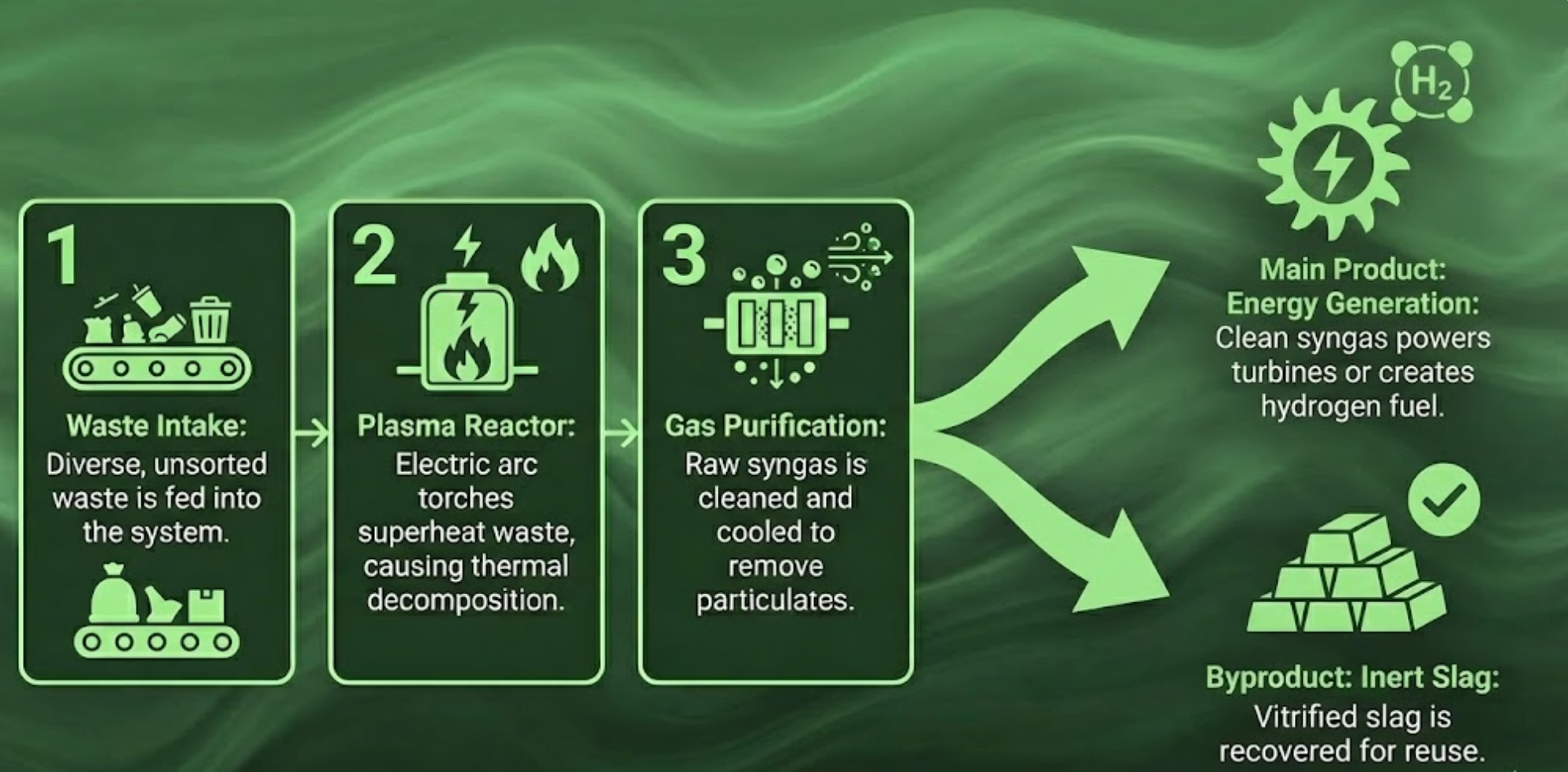
Six steps. Mixed unsorted waste in. Fuel-cell-ready hydrogen out. Inert vitrified slag — usable in construction — as the only solid byproduct.
- 01Input
Waste Input
10 TPD mixed waste, no segregation required. Magnetic metal removal is the only pre-processing.
- 023,000–10,000°C
Plasma Arc Generation
Ultra-high-temperature plasma arc — complete molecular bond breaking. No open flame means no combustion byproducts.
- 03Output
Thermal Decomposition
Output: syngas (H₂ 48%, CO₂ 32%, CO 16%, other 4%) plus inert vitrified slag — usable in construction.
- 04140°C → 35°C
Syngas Cleanup
Multi-stage scrubbing drops temperature from 140°C to 35°C. Moisture content brought to under 1 ppm before purification.
- 0512 bar(g) · 8–10 min cycle
PSA Purification
5-vessel Pressure Swing Adsorption with CMS adsorbent. Drives H₂ to 99.9% purity, fuel-cell ready.
- 06250 bar(g) · 500 m³/hr
H₂ Dispensing
Multi-stage compression to 250 bar(g) for industrial offtake or onsite refuelling. 500 m³/hr peak dispense.
Syngas Composition (Post-Decomposition)
Proven efficacy across diverse waste streams.
| Waste Type | Power In (kW/hr) | Power Out (kW/hr) | Net Power (kW/hr) | Syngas (m³/hr) | Slag (kg/hr) | MW / ton |
|---|---|---|---|---|---|---|
| MSW · 20% moisture | 35 | 66 | 31 | ~65 | ~130 | ~0.7 |
| Plastics | 30 | 120 | 90 | ~118 | ~60 | ~2.1 |
| Hazardous Waste* | 105 | 52 | −53* | ~51 | ~100 | ~1.0 |
| Tires | 20 | 98 | 78 | ~97 | ~120 | ~1.8 |
| Oil Sludge | 32 | 125 | 93 | ~126 | ~63 | ~2.2 |
| Biomedical | 20 | 80 | 64 | ~87 | ~80 | ~1.6 |
* Hazardous Waste net power is negative because of the high energy input required for full molecular decomposition. This is expected and acceptable — the value of the process for hazardous streams is in safe destruction and material recovery, not power generation.
A clear technological advantage.
| Criteria | Ardana PAGS ✓ | Incineration ✗ |
|---|---|---|
| Core Principle | Ultra-high-temp decomposition (starved combustion) | Direct burning of waste |
| Emissions | Significantly lower toxins — no open flame | Higher risk of dioxins and furans |
| Residue | Inert, minimal-volume vitrified slag — reusable | Higher volume of potentially toxic ash |
| Energy Recovery | High-value, flexible syngas → H₂ | Mostly low-value heat / steam |
| Waste Flexibility | Minimal pre-sorting — magnetic metal removal only | Extensive pre-sorting required |
| Moisture Handling | Thermodynamic asset — not a liability | Requires pre-drying — high OPEX |
| Parameter | PAGS (Ardana) | Incineration | EPA Standard |
|---|---|---|---|
| NOx (ppmvd) | 35–40 | 150 | 250 |
| PM (mg/dscm) | <5 | 20–24 | 34 |
| SO₂ (ppmvd) | <2 | 30 | 55 |
| Mercury (µg/dscm) | <2 | 50–80 | 55 |
| Dioxins / Furans | 0 ng/dscm | 13–30 | 25 |
PAGS results derived from BARC / IIT Roorkee / CSIR-CMERI trial data across 80+ R&D installations and 5+ years of operating history. EPA Standard values per US 40 CFR §60 Subpart Eb.